
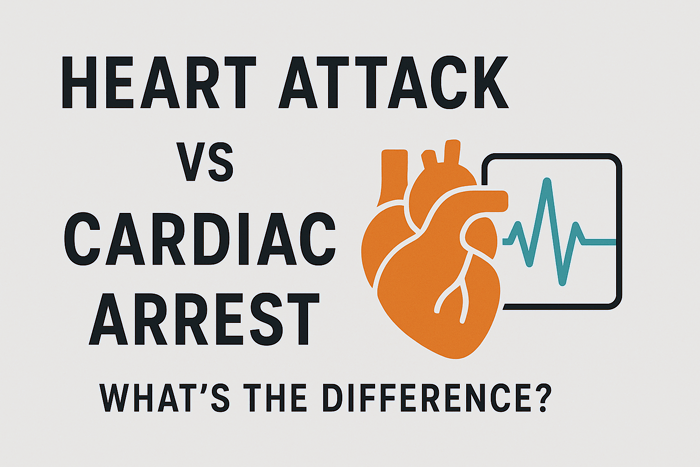
Heart Attack vs Cardiac Arrest – What’s the Difference? It is one of the most common questions people ask, especially after hearing about someone suddenly collapsing or being rushed to the hospital. Although these two medical emergencies are often used interchangeably in everyday conversations, they are not the same. Both affect the heart, both require immediate medical attention, and both can be life-threatening, but they occur for very different reasons and demand different responses.
Understanding the difference between a heart attack and a cardiac arrest is more than just medical awareness. It can help you identify the warning signs, take the right action during an emergency, and potentially save a life. In this article, we’ll explain how each condition occurs, the symptoms to watch for, the immediate treatment required, and what you can do to reduce your risk through healthy lifestyle choices and personalized preventive care.
What Is a Heart Attack?
A heart attack, medically called a myocardial infarction, occurs when the blood supply to a portion of the heart muscle becomes blocked. This blockage usually happens because fatty deposits, cholesterol, and plaque build up inside the coronary arteries over many years. If a plaque ruptures, a blood clot can form and completely block the artery.
Without a continuous supply of oxygen-rich blood, the affected part of the heart muscle begins to suffer damage. If blood flow is not restored quickly, permanent injury to the heart muscle can occur.
Unlike what is commonly portrayed in movies, a heart attack does not always cause someone to collapse instantly. In many cases, the person remains awake and conscious while experiencing symptoms that may worsen gradually over several minutes or even hours.
Common symptoms of a heart attack include:
- Pain, pressure, heaviness, or tightness in the chest
- Pain spreading to the left arm, right arm, shoulders, neck, jaw, or upper back
- Shortness of breath
- Cold sweating
- Nausea or vomiting
- Unusual fatigue
- Light-headedness or dizziness
- Anxiety or a feeling that something is seriously wrong
It is important to remember that symptoms can differ from person to person. Women, elderly individuals, and people with diabetes may experience milder or unusual symptoms, making heart attacks more difficult to recognize.
What Is Cardiac Arrest?
Cardiac arrest is a completely different medical emergency.
Instead of a blockage in blood flow, cardiac arrest occurs when the heart suddenly stops beating effectively because of a malfunction in its electrical system. The heart develops a dangerous abnormal rhythm, known as an arrhythmia, preventing it from pumping blood throughout the body.
Since blood circulation stops immediately, oxygen no longer reaches the brain or other vital organs.
Within seconds, the person loses consciousness. Breathing either stops completely or becomes abnormal, and there is no detectable pulse.
Without immediate medical intervention, death can occur within a few minutes.
Unlike a heart attack, cardiac arrest usually happens suddenly and without warning.
Signs of cardiac arrest include:
- Sudden collapse
- Loss of consciousness
- No pulse
- No normal breathing
- Unresponsiveness
- Occasionally gasping for air during the first few moments
Cardiac arrest is an extreme medical emergency where every second counts.
Heart Attack vs Cardiac Arrest: The Main Difference
The easiest way to understand the difference is to think about the two systems involved.
A heart attack is a circulation problem.
Blood cannot reach part of the heart muscle because an artery is blocked.
A cardiac arrest is an electrical problem.
The heart’s electrical system malfunctions, causing the heart to stop pumping blood effectively.
During a heart attack, the heart usually continues beating, although its function may be compromised.
During cardiac arrest, the heart cannot pump blood at all.
Because of this, a person experiencing a heart attack is often conscious and able to communicate. A person in cardiac arrest is unconscious, not breathing normally, and requires immediate resuscitation.
Can a Heart Attack Cause Cardiac Arrest?
Yes, it can.
A severe heart attack can damage the heart muscle enough to disrupt its electrical activity. This may trigger a dangerous arrhythmia, leading to cardiac arrest.
However, it is equally important to understand that many cardiac arrests occur without a heart attack.
Other causes include:
- Electrical abnormalities of the heart
- Cardiomyopathy
- Heart failure
- Congenital heart diseases
- Severe electrolyte imbalances
- Drug overdose
- Drowning
- Electrocution
- Major trauma
Therefore, while the two conditions are related, they are not identical.
What Should You Do During a Heart Attack?
If someone appears to be having a heart attack:
- Call emergency medical services immediately.
- Help the person sit comfortably and remain calm.
- Loosen any tight clothing.
- If they are not allergic and have no medical reason to avoid it, they may be advised to chew an aspirin while waiting for medical help.
- Do not delay treatment by assuming the pain will disappear.
- Avoid giving food or drinks unless instructed by a healthcare professional.
The faster medical treatment begins, the greater the chances of limiting damage to the heart muscle.
What Should You Do During Cardiac Arrest?
Cardiac arrest requires immediate action.
If the person is unresponsive and not breathing normally:
- Call emergency medical services immediately.
- Begin CPR without delay.
- Push hard and fast in the center of the chest at a rate of approximately 100 to 120 compressions per minute.
- If an Automated External Defibrillator (AED) is available, use it immediately by following its voice instructions.
- Continue CPR until trained medical professionals arrive or the person begins breathing again.
Early CPR keeps oxygenated blood flowing to the brain and vital organs, significantly improving survival chances.
Risk Factors Shared by Both Conditions
Although heart attack and cardiac arrest occur differently, they often share several common risk factors.
These include:
- High blood pressure
- High cholesterol
- Diabetes
- Obesity
- Smoking
- Excessive alcohol consumption
- Physical inactivity
- Chronic stress
- Poor dietary habits
- Family history of heart disease
Many of these factors develop silently over several years before causing noticeable symptoms.
This is why preventive healthcare is just as important as emergency treatment.
Prevention Starts Long Before Symptoms Appear
Heart disease rarely develops overnight.
Your daily food choices, physical activity, sleep quality, stress levels, and overall lifestyle play a major role in determining your long-term cardiovascular health.
Regular health check-ups, maintaining a healthy weight, controlling blood sugar and cholesterol levels, avoiding tobacco, and staying physically active are proven ways to reduce the risk of serious heart conditions.
However, one important reality is that not everyone responds to the same diet in the same way.
Two individuals eating identical meals may experience completely different effects on cholesterol levels, body weight, inflammation, or blood sugar. Much of this variation is influenced by genetics.
Why DNA-Based Nutrition Can Support Heart Health
Traditional diet plans often follow a one-size-fits-all approach. While they may help some people, others struggle to achieve lasting improvements despite following the same recommendations.
DNA-based nutrition offers a more personalized approach.
By understanding how your genes influence fat metabolism, carbohydrate tolerance, inflammation, nutrient absorption, weight management, and cardiovascular risk, a nutrition plan can be tailored specifically to your body’s unique needs.
This allows individuals to make smarter food choices based on their genetic profile rather than relying solely on general dietary advice.
For people with a family history of heart disease, obesity, diabetes, or high cholesterol, personalized nutrition may provide valuable insights that support long-term preventive care alongside regular medical supervision.
Take Charge of Your Heart Health Today
Heart attack and cardiac arrest are both life-threatening emergencies, but they are not the same. Recognizing the difference can help you respond correctly when every second matters.
While emergency care saves lives during a crisis, prevention remains the most powerful strategy.
Adopting healthier habits, undergoing regular health evaluations, and following a personalized nutrition plan can significantly reduce the risk of lifestyle-related diseases and improve overall heart health.
If you are looking for a science-backed, personalized approach to nutrition and preventive healthcare, consult Dr. Rushikesh Trivedi at DNA Diet Clinic. A DNA-based nutrition assessment can help identify how your body responds to different foods and support a lifestyle plan designed specifically for your genetic profile.
To book your consultation, call: +91 99133 39031.