

When most people step onto a weighing scale, they believe the number they see tells the complete story about their health. If the number goes up, they assume they have gained fat. If it goes down, they celebrate successful weight loss.
The reality is far more complex. Understanding Your Body Weight is necessary.
Your body weight is not simply “fat.” It is a combination of several components, many of which change daily, while others remain relatively constant throughout life. Understanding what makes up your body weight, and why it behaves differently from someone else’s, is the first step toward achieving healthy, sustainable weight loss.
At Dr. Rushikesh Trivedi’s DNA-based nutrition clinic, we believe that successful weight management begins with understanding your unique body rather than following generic diet trends.
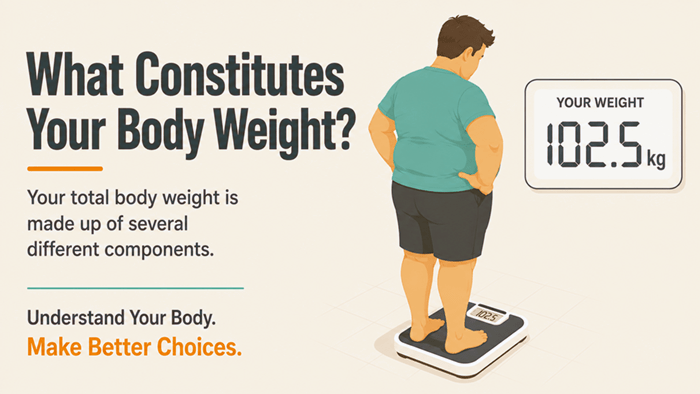
What Constitutes Your Body Weight?
Your total body weight is made up of several different components:
- Body fat
- Skeletal muscle
- Bones
- Internal organs
- Body water
- Glycogen (stored carbohydrates)
- Food and waste present in the digestive tract
When you stand on a weighing scale, it measures the sum of all these components, not just body fat.
This is one of the biggest reasons why the weighing scale alone is not the best indicator of your progress. Two people weighing exactly 70 kg may have completely different body compositions. One may have a higher percentage of muscle and lower body fat, while the other may carry more fat and less muscle. Although the scale shows the same number, their health, strength, metabolism, and appearance can differ significantly.
This is why understanding body composition is far more meaningful than focusing solely on body weight.
Which Parts of Body Weight Are Fixed and Which Are Flexible?
Not every component of your body weight changes equally.
Relatively Fixed Components
Certain aspects of your body remain relatively stable over time:
- Bone structure and frame size
- Height
- Size of major organs
- Your inherited genetic blueprint
These factors cannot be significantly changed through dieting or exercise.
Flexible Components
Fortunately, several components can change considerably:
- Body fat
- Muscle mass
- Body water
- Glycogen stores
- Food present in the digestive system
These are responsible for most short-term changes you notice on the weighing scale.
For example, eating a high-carbohydrate meal can temporarily increase glycogen stores. Since every gram of glycogen binds several grams of water, your weight may increase by one or two kilograms within a day or two, even though you have gained very little body fat.
Similarly, after intense exercise, illness, or dietary changes, your body water levels may fluctuate considerably.
Understanding this helps reduce unnecessary anxiety over normal daily weight variations.
Why Does the Same Diet Work for One Person but Not Another?
One of the most common questions people ask is:
“My friend followed this diet and lost 10 kg. Why isn’t it working for me?”
The answer lies in human individuality.
Every person’s body is different because of several factors:
- Genetics
- Hormonal balance
- Age
- Gender
- Muscle mass
- Physical activity
- Sleep quality
- Stress levels
- Medical conditions
- Gut microbiome
- Lifestyle habits
These factors influence how your body burns calories, stores fat, regulates hunger, and responds to different foods.
There is no single “best diet” for everyone because there is no such thing as an average human body.
The Role of DNA in Body Weight
Your DNA is often described as your body’s instruction manual. While it does not determine your destiny, it influences how your body functions.
Certain genes affect:
- Appetite and satiety
- Carbohydrate metabolism
- Fat metabolism
- Insulin sensitivity
- Caffeine metabolism
- Vitamin and mineral requirements
- Exercise response
- Recovery after physical activity
- Inflammation
For example, two individuals consuming identical meals may process carbohydrates differently because of genetic variations. One may efficiently utilize carbohydrates for energy, while another may be more prone to storing excess energy as fat under similar conditions.
Similarly, some individuals naturally respond better to endurance exercise, while others may benefit more from strength training.
Understanding these genetic tendencies allows nutrition plans to become more personalized rather than relying on trial and error.
It is important to remember that genes influence your tendencies, they do not determine your future. Healthy eating, physical activity, adequate sleep, and stress management remain essential for everyone.
The Role of Nutrition in Body Weight
Nutrition plays a much bigger role than simply counting calories.
The quality of food influences:
- Hunger
- Satiety
- Hormonal balance
- Energy levels
- Blood sugar control
- Muscle preservation
- Fat loss
- Overall health
A balanced nutritional approach includes:
- Adequate protein to preserve muscle
- Fibre-rich foods to improve fullness
- Healthy fats for hormonal health
- Appropriate carbohydrate intake based on individual needs
- Sufficient vitamins and minerals
- Proper hydration
Extreme calorie restriction may produce rapid weight loss initially, but much of that loss often comes from water and muscle, not body fat.
Healthy nutrition aims to reduce body fat while preserving lean muscle mass, supporting metabolism and long-term health.
Why Does Your Weight Fluctuate During the Week?
Many people become discouraged after noticing their weight increase overnight.
In reality, short-term weight fluctuations are completely normal.
Several factors contribute to these changes:
- Water retention
- Salt intake
- Carbohydrate consumption
- Glycogen storage
- Menstrual cycle
- Stress
- Poor sleep
- Constipation
- Intense exercise
- Certain medications
A fluctuation of 0.5 to 2 kg over the course of a week is often due to changes in water balance and digestive contents rather than fat gain.
To gain one kilogram of body fat, a person generally needs a sustained calorie surplus over time. Therefore, an overnight increase on the scale is rarely the result of suddenly gaining fat.
Instead of weighing yourself multiple times a day, it is more meaningful to monitor trends over several weeks under similar conditions.
What Does a Healthy Weight Loss Journey Look Like?
Healthy weight loss is rarely a straight line.
During the first week of lifestyle changes, many individuals experience a rapid drop in weight. This is primarily because glycogen stores decrease, leading to the loss of associated water, not because large amounts of fat have disappeared.
Over the following weeks, fat loss becomes more gradual.
Some weeks may show little or no change on the scale despite continued improvements in body composition, fitness, or metabolic health.
Weight loss plateaus are also common. They do not necessarily mean that progress has stopped. Often, they reflect your body’s natural adaptation or temporary changes in hydration.
A healthy journey focuses on:
- Losing body fat rather than muscle
- Improving metabolic health
- Building sustainable eating habits
- Increasing physical activity
- Maintaining long-term consistency instead of pursuing quick fixes
Success should not be measured only by kilograms lost, but also by improved energy levels, better sleep, enhanced fitness, healthier blood test results, and greater confidence.
How DNA-Based Nutrition Supports Healthy Weight Loss
At Dr. Rushikesh Trivedi’s clinic, weight management goes beyond simply reducing calories.
The process begins with understanding the individual.
This includes evaluating medical history, lifestyle, eating habits, physical activity, and, where appropriate, genetic information through DNA analysis. The goal is to understand how each person’s body may respond differently to various nutrients and lifestyle interventions.
Based on this information, a personalized nutrition strategy is developed that aligns with the individual’s biology, preferences, and long-term health goals.
The emphasis is not on temporary dieting but on creating sustainable lifestyle changes that are practical, enjoyable, and scientifically informed.
Regular monitoring and follow-up help ensure that the plan evolves as the individual’s body and goals change over time.
The Bottom Line
Weight loss is far more complex than eating less and exercising more. Your body weight is influenced by body composition, genetics, nutrition, hormones, lifestyle, hydration, and many other interconnected factors.
Rather than comparing yourself with others or chasing rapid results, it is more beneficial to understand your own body’s unique needs.
A personalized, evidence-informed approach, supported by nutrition, lifestyle modification, and, when appropriate, DNA insights, can help you lose fat, preserve muscle, improve overall health, and achieve results that last.
Because the ultimate goal is not simply to weigh less.
The goal is to become healthier, stronger, and more confident in a way that is sustainable for life.