

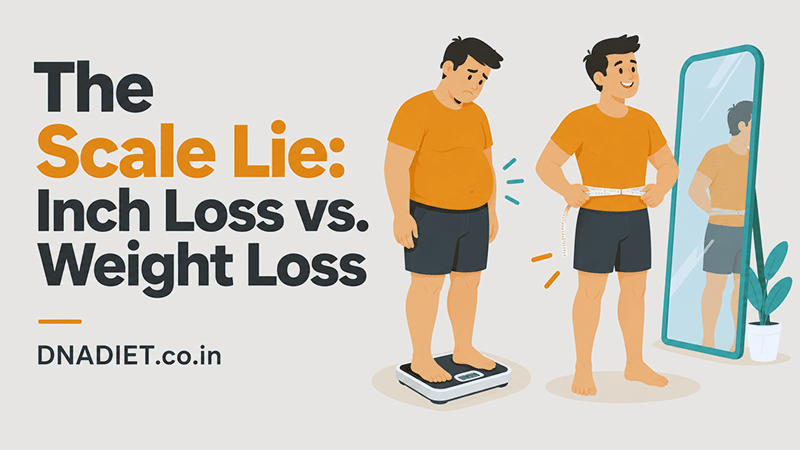
If you have ever stepped on a bathroom scale after weeks of consistent efforts, only to see the numbers completely stagnant, you know the exact mix of confusion and despair it causes.
From the perspective of DNA-based nutrition and metabolic science, this exact scenario plays out constantly. Individuals often experience profound internal physical transformations, yet their scale log remains flat. When evaluating body composition and physical structure, the reality tells a completely different story: they are achieving significant inch loss through body fat reduction, even though their scale weight is unchanged.
So, why does inch loss happen while weight loss stays stuck?
To understand this phenomenon, we must look into body composition, metabolic physiology, and the genetic blueprint that dictates how the human body stores, manages, and mobilizes fat.
1. Defining the Terms: Weight Loss vs. Inch Loss
To understand the relationship between physical body size changes and scale numbers, we must first separate total body mass from body composition.
Total body mass is made up of two primary biological components:
-
Fat Mass: This includes subcutaneous fat (the fat stored directly under the skin) and visceral fat (the fat surrounding internal organs).
-
Lean Body Mass: This includes skeletal muscle tissue, bone density, internal organ mass, circulating blood volume, and cellular water content.
What is Weight Loss?
Weight loss simply refers to a numerical decrease in total body mass. A standard bathroom scale measures everything simultaneously: muscle, fat, retained water, bone tissue, stored glycogen, and unabsorbed food in the digestive tract. When total weight drops, it indicates a loss of mass, but it does not differentiate whether that mass came from fat, muscle tissue, or simple water shifts.
What is Inch Loss?
Inch loss refers to a reduction in physical body volume and circumferences—such as around the waist, hips, chest, and arms. It serves as a direct marker of body recomposition: the physiological process where body fat is reduced while lean muscle mass is preserved or increased. During body recomposition, total mass may stay identical, but physical dimensions shrink.
2. The Density Factor: Why Inch Loss Happens Without Weight Loss
A common misconception in human biology is that muscle tissue weighs more than fat tissue. In terms of mass, one pound of muscle weighs exactly the same as one pound of fat.
However, density is where the crucial physical difference lies. Density is defined as mass divided by volume.
-
Skeletal Muscle: Muscle tissue is dense, tightly packed, and highly hydrated.
-
Adipose (Fat) Tissue: Fat tissue is bulky, loose, and occupies significantly more physical volume per unit of mass.
Because adipose tissue is roughly eighteen to twenty percent less dense than muscle tissue, one pound of fat takes up considerably more physical space in the body than one pound of muscle.
If an individual loses five pounds of pure fat mass while simultaneously gaining five pounds of lean muscle mass, total body weight on the scale remains completely unchanged. However, total physical volume decreases dramatically. The body experiences noticeable inch loss, becoming smaller in volume despite the scale showing zero numerical weight loss.
3. How Genetics Influence Inch Loss and Fat Mobilization
Human bodies do not manage energy storage identically. Nutrigenomics—the study of how genetic variations influence metabolic responses—demonstrates that an individual’s genetic code plays a key role in where fat is stored and how inch loss occurs during metabolic shifts.
Genetic Determinants of Fat Distribution
-
The FTO Gene Variant: Specific variations within the FTO (Fat Mass and Obesity-Associated) gene correlate with higher tendencies toward visceral fat storage around abdominal organs. When metabolic shifts occur, individuals carrying these variants often mobilize deep visceral fat first. Because visceral fat lies beneath the abdominal wall around organs, shedding it creates rapid waistline inch loss long before major shifts show up on a standard weight scale.
-
Gynoid vs. Android Depots: Genetic predisposition dictates whether an individual predominantly utilizes gynoid storage (fat concentrated around the hips and thighs) or android storage (fat concentrated around the abdomen). Subcutaneous fat in gynoid regions and visceral fat in android regions mobilize at different physiological rates, directly determining which body parts experience inch loss first.
When nutrition and metabolism align with genetic predispositions, the body prioritizes burning fat tissue for fuel rather than breaking down lean tissue, maximizing structural inch loss regardless of scale movements.
4. Physiological Factors That Disconnect Weight Loss from Inch Loss
When body fat is actively decreasing and inch loss is occurring, several normal physiological mechanisms can temporarily add weight or retain fluid, completely masking progress on a weight scale:
Muscle Repair and Micro-Inflammation
When physical activity levels increase or change, skeletal muscle tissue undergoes natural microscopic adaptation. The immune system responds to physical stress by temporary fluid influx and localized cellular swelling to repair tissues. This temporary hydration increase adds mass on the scale, masking simultaneous inch loss from fat reduction.
Glycogen Storage and Water Binding
Carbohydrates are stored in human skeletal muscle and liver tissue as glycogen for ready energy. Every single gram of stored glycogen naturally binds with three to four grams of cellular water. Changes in glycogen replenishment levels alter water weight noticeably, which can easily balance out the mass lost from burned fat.
Cortisol and Hydration Dynamics
Variations in sleep, stress, or systemic recovery influence cortisol, a primary steroid hormone involved in fluid regulation. Higher cortisol levels instruct the renal system to retain sodium and water. Fat cells that have been emptied of triglycerides often temporarily hold onto water before shrinking, keeping overall scale weight stable even while inch loss progresses.
5. Differentiating Metrics of Progress
Relying exclusively on total body weight provides an incomplete picture of metabolic progress because it fails to distinguish between tissue types or fluid movements.
-
Bathroom Scale (Weight Loss): Measures total gravitational pull on body mass. Highly sensitive to daily fluid shifts, digestive contents, and sodium intake.
-
Circumference & Volume (Inch Loss): Reflects changes in physical space occupancy and body composition, directly corresponding to shifts in fat mass versus muscle mass.
-
Clinical Composition Scans: Tools like bioimpedance or dual-energy X-ray absorptiometry (DEXA) evaluate the actual breakdown of bone, lean tissue, and fat mass to confirm true physiological changes.
Summary
Weight loss is simply a quantitative measurement of total mass relative to gravity. In contrast, inch loss reflects qualitative shifts in tissue structure, metabolic efficiency, and fat mobilization.
Understanding the interplay between muscle density, fluid retention, and genetic fat distribution clarifies why scale weight often stalls during periods of significant inch loss.