

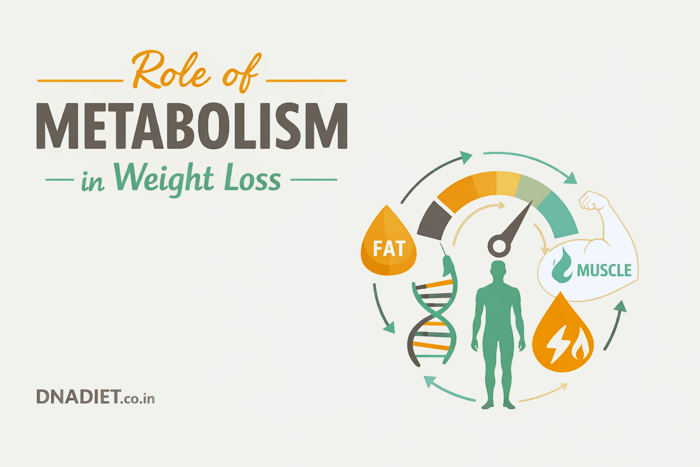
Weight loss is often simplified into one common advice: eat less and move more. However, the human body is far more complex than a simple calorie equation. In my practice, many individuals come to me after trying multiple diet plans without sustainable results. As the Best dietician in Ahmedabad for weight loss, I frequently explain that long-term weight management depends on understanding the Role of Metabolism in Weight loss, which determines how efficiently your body converts food into energy and burns calories.
What Exactly is Metabolism?
Metabolism refers to the series of chemical processes that occur in the body to convert food into energy. This energy fuels essential bodily functions such as breathing, digestion, blood circulation, and cell repair.
Your metabolism determines how efficiently your body uses the calories you consume. Two people may eat the same food and follow the same workout routine, yet their bodies may respond very differently. This difference is mainly because metabolic rates vary from person to person.
In simple terms, metabolism is the engine that runs your body.
Basal Metabolic Rate (BMR): Your Body’s Energy Requirement
A significant portion of the calories your body burns daily goes toward what is called Basal Metabolic Rate (BMR). This represents the amount of energy your body requires to maintain basic life functions even when you are resting.
Several factors influence BMR, including:
-
Age
-
Gender
-
Muscle mass
-
Hormonal balance
-
Body composition
-
Genetics
People with a higher BMR burn calories faster, while those with a lower metabolic rate may find it easier to gain weight and harder to lose it.
Why Metabolism Matters in Weight Loss
When metabolism functions efficiently, the body burns calories properly and maintains a healthy balance between energy intake and expenditure. However, if metabolism slows down, the body becomes more likely to store excess energy as fat.
Several lifestyle factors can negatively affect metabolism, including:
-
Poor eating habits
-
Crash dieting
-
Chronic stress
-
Lack of sleep
-
Hormonal imbalances
-
Sedentary lifestyle
One of the biggest mistakes people make while trying to lose weight is following extremely restrictive diets. When calorie intake drops too drastically, the body shifts into a survival mode and slows down metabolism, making fat loss more difficult.
Understanding the Role of Metabolism in Weight loss is therefore crucial when designing a sustainable and effective diet strategy.
Genetics and Metabolism
One of the most fascinating aspects of metabolism is the influence of our genetic makeup. Our genes determine how efficiently we process carbohydrates, fats, and proteins, and how our body stores or burns energy.
Through DNA-based nutrition analysis, we can identify genetic markers that influence metabolism. These markers help us understand how the body responds to different nutrients and how likely a person may be to gain weight under certain dietary conditions.
This explains why two people following the same diet may experience completely different results. What works perfectly for one individual may not work for another because their genetic metabolic responses are different.
Muscle Mass and Metabolic Activity
Muscle tissue is metabolically active, meaning it burns more calories than fat tissue even while the body is at rest. Individuals with higher muscle mass generally have a higher metabolic rate.
This is one reason why resistance training and strength-building exercises play an important role in weight management. Increasing lean muscle mass helps the body burn more calories throughout the day, supporting long-term weight control.
However, exercise alone cannot compensate for a poorly structured diet.
Hormones and Metabolism
Hormones play a significant role in regulating metabolism. Hormones such as insulin, thyroid hormones, cortisol, and leptin directly influence how the body uses energy and stores fat.
Certain medical conditions can disrupt metabolic balance, including:
-
Thyroid disorders
-
PCOS
-
Insulin resistance
-
Chronic stress
In such situations, generic diet charts often fail because they do not address the underlying metabolic factors affecting weight gain.
Why Personalized Nutrition is Important
Traditional diet plans usually follow a one-size-fits-all approach, but human metabolism is highly individualized. Factors such as genetics, hormonal balance, lifestyle habits, and gut health all influence how the body responds to food.
This is where personalized nutrition becomes extremely valuable. Through nutrigenomics, we can understand how your body reacts to specific nutrients and design a diet plan tailored to your metabolic profile.
Such an approach helps in:
-
Improving metabolic efficiency
-
Supporting healthy fat loss
-
Reducing the risk of metabolic disorders
-
Creating sustainable lifestyle habits
Sustainable Weight Loss Requires Metabolic Understanding
Weight loss should never rely on extreme dieting or temporary solutions. Instead, the focus should be on building a long-term system where the body’s metabolism works efficiently.
This involves:
-
Eating foods suited to your metabolic profile
-
Maintaining hormonal balance
-
Building lean muscle mass
-
Managing stress levels
-
Following a personalized nutrition plan
When these factors align properly, weight loss becomes more sustainable and easier to maintain.
Final Thoughts
Many people believe they are failing at weight loss because they lack discipline, but in reality the issue is often a lack of understanding of how their body functions. The Role of Metabolism in Weight loss is one of the most important yet overlooked aspects of nutrition.
Every person has a unique metabolic profile influenced by genetics, hormones, and lifestyle habits. Therefore, diet strategies should always be personalized rather than generic.
By focusing on metabolic health and individualized nutrition, weight loss can become a natural and sustainable outcome rather than a constant struggle.