

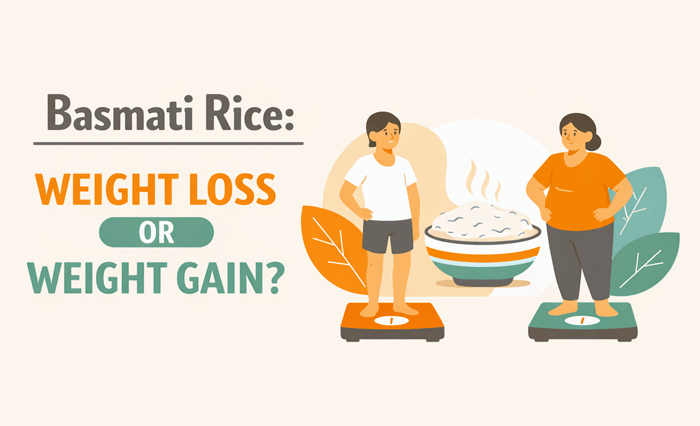
Does Basmati Rice Help in Weight Loss or Weight Gain? Basmati rice often finds itself at the center of the weight-loss debate. Some label rice as the enemy of fat loss, while others consider basmati a “safe” carbohydrate. So which is true? Does basmati rice help in weight loss or does it cause weight gain?
As a DNA-based nutrition expert, my answer is simple but nuanced: basmati rice can support weight loss or weight gain depending on your genetics, metabolism, portion size, and timing. There is no universal yes or no.
Let’s break it down scientifically.
What Makes Basmati Rice Different?
Basmati rice has a few unique characteristics that distinguish it from regular white rice:
-
Lower Glycemic Index (GI): Basmati rice typically has a lower GI compared to other white rice varieties. This means it releases glucose into the bloodstream more slowly, reducing sudden insulin spikes.
-
Long-grain structure: Its starch composition allows for slower digestion.
-
Naturally gluten-free and easy to digest, making it suitable for people with sensitive guts.
However, “lower GI” does not mean “low calorie.” Basmati rice is still a carbohydrate-dense food.
Can Basmati Rice Help in Weight Loss?
Yes — for the right person and in the right quantity.
From a DNA-nutrition standpoint, individuals with:
-
Good insulin sensitivity
-
Efficient carbohydrate metabolism
-
Active lifestyles or higher muscle mass
can include basmati rice in a weight-loss plan without negative effects.
When consumed in controlled portions, basmati rice can:
-
Provide sustained energy
-
Prevent extreme hunger and binge eating
-
Support workout recovery
-
Reduce cravings caused by overly restrictive diets
In many people, removing rice completely leads to stress, hormonal imbalance, and poor adherence. Strategically including basmati rice can actually improve long-term fat loss results.
When Does Basmati Rice Cause Weight Gain?
Basmati rice can contribute to weight gain when:
-
Portion sizes are excessive
-
It is eaten frequently without balancing protein and fiber
-
The individual has poor carbohydrate tolerance at a genetic level
-
Physical activity is low
-
It is consumed late at night when insulin sensitivity is naturally reduced
For people with genetic tendencies toward:
-
Insulin resistance
-
Slower carbohydrate metabolism
-
Higher fat storage response
even “healthy” carbs like basmati rice can lead to fat accumulation if not customized.
The DNA Factor: Why One Rule Doesn’t Fit All
This is where DNA-based nutrition changes the conversation.
Two people can eat the same bowl of basmati rice:
-
One uses it efficiently for energy
-
The other stores it as fat
Why? Because genes influence:
-
How your body responds to carbohydrates
-
How quickly glucose is cleared from blood
-
How insulin functions
-
Whether carbs fuel muscle or fat
Without understanding your genetic blueprint, dietary advice remains guesswork.
Portion, Pairing & Timing Matter
Even for carb-friendly individuals, how you eat basmati rice matters:
-
Portion: Usually ½ to 1 cup cooked, depending on body composition and goals
-
Pairing: Always combine with protein, vegetables, and healthy fats
-
Timing: Best consumed during the day or post-workout, not late night
-
Frequency: Daily for some, occasional for others — DNA decides
Rice eaten mindlessly is a problem. Rice eaten strategically is a tool.
Weight Loss Is Not About Demonizing Food
Weight loss does not come from eliminating rice; it comes from understanding your body.
Basmati rice is neither good nor bad. It is simply information. Your genes decide how that information is used.
Final Verdict
-
Basmati rice can support weight loss if your genetics allow efficient carb metabolism and portions are controlled.
-
It can cause weight gain if your body is carb-sensitive and intake is not personalized.
The future of nutrition is not “eat this” or “avoid that.”
The future is eat what your DNA allows.
If you want sustainable weight loss, stop asking whether basmati rice is good or bad — and start asking whether it is right for you.
Want to achieve weight loss?
Whatsapp Now: 99133 39031