

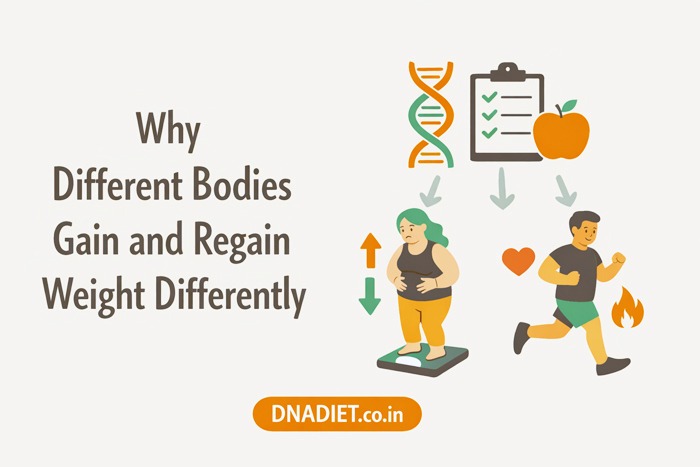
Many people trying to lose weight often wonder why some individuals gain weight very easily while others seem to eat freely without gaining much. Similarly, many people lose weight successfully but struggle with gaining it back after some time. This raises an important question — Why Different Bodies Gain and Regain Weight Differently. In my practice as a Weight Loss Nutritionist in Ahmedabad, I frequently see individuals who feel frustrated because their bodies respond differently to diet plans compared to others.
Understanding these differences is essential because weight gain and weight regain are influenced by several biological and lifestyle factors, and every body responds to food, metabolism, and hunger signals in its own way.
The Body’s Natural Weight Regulation System
The human body constantly tries to maintain balance. It regulates body weight through a complex interaction of metabolism, hormones, appetite signals, and energy expenditure.
Whenever we eat food, the body decides how that energy will be used. It can:
-
Use the energy immediately for physical activities
-
Store it temporarily as glycogen in muscles and liver
-
Convert excess energy into body fat for future use
Different bodies manage these processes with varying efficiency. Some individuals naturally burn calories faster, while others are biologically more inclined to store energy as fat.
In earlier human history, efficient fat storage was actually beneficial for survival during periods of food scarcity. However, in today’s world where food is constantly available, this same biological tendency can lead to weight gain.
Why Some People Gain Weight More Easily
Many individuals feel that they gain weight even with small increases in food intake. This usually happens because their bodies are naturally more efficient at conserving energy.
Several biological factors influence this tendency.
Metabolic Rate
Metabolism determines how quickly the body burns calories. Individuals with a higher metabolic rate burn more calories throughout the day, even while resting.
Those with a slower metabolism may require fewer calories to maintain their body weight. As a result, consuming excess calories can lead to faster weight gain.
Appetite Regulation
Hunger and fullness are controlled by hormones produced in the brain and digestive system. Two important hormones involved in appetite control are ghrelin, which stimulates hunger, and leptin, which signals fullness.
Some individuals experience stronger hunger signals or delayed satiety signals, which may lead to consuming more food before feeling satisfied.
This difference is biological rather than simply behavioral.
Fat Storage Patterns
Different bodies store fat in different areas. Some individuals tend to accumulate fat around the abdomen, while others store it around hips, thighs, or other areas of the body.
Abdominal fat storage is often associated with hormonal responses, stress levels, and metabolic behavior.
Response to Carbohydrates and Fats
Not everyone processes nutrients in the same way. Some individuals tolerate carbohydrates very well and use them efficiently for energy. Others may experience rapid spikes in blood sugar levels after carbohydrate consumption, which can increase fat storage if not balanced properly.
Similarly, the body’s ability to process dietary fats can also vary from person to person.
Why Weight Regain Happens After Dieting
Weight regain after dieting is a common challenge. Many individuals successfully lose weight but gradually gain it back after months or even years.
This happens because the body naturally tries to maintain its previous weight.
Metabolic Adaptation
When calorie intake is reduced significantly during dieting, the body may slow down its metabolism in order to conserve energy.
This is known as metabolic adaptation. When normal eating resumes, the slower metabolism may cause calories to be stored more easily as fat, resulting in weight regain.
Increased Hunger Signals
During prolonged dieting, the body may increase hunger hormones in order to encourage higher food intake. This biological response is meant to restore lost energy reserves.
As a result, maintaining long-term weight loss can become challenging.
Strict Dieting Patterns
Extremely restrictive diets that eliminate many foods may work temporarily but are difficult to sustain long term. Once individuals return to their regular eating patterns, calorie intake often increases suddenly, which can lead to weight regain.
Sustainable dietary habits are therefore much more effective than extreme short-term diets.
Lifestyle Factors That Influence Weight Gain
Apart from biological differences, lifestyle factors also influence how the body manages weight.
These include:
-
Sleep quality
-
Stress levels
-
Physical activity
-
Meal timing
-
Type of food consumed
-
Sedentary lifestyle habits
For example, chronic stress can increase cortisol levels, which promotes fat storage in the abdominal area. Similarly, poor sleep can disrupt appetite hormones and increase cravings for high-calorie foods.
Over time, these lifestyle factors interact with the body’s natural tendencies and affect overall weight management.
The Role of Personalized Nutrition
Modern nutrition science is increasingly recognizing that weight management is not a one-size-fits-all process. Each individual has a unique metabolic profile that influences how their body responds to different foods and dietary patterns.
This is where personalized nutrition approaches, including DNA-based nutrition analysis, can provide valuable insights into metabolic tendencies and nutrient responses.
By understanding these biological differences, nutrition strategies can be designed in a way that aligns with the body’s natural functioning.
Final Thoughts
Weight gain and weight regain are complex processes influenced by metabolism, appetite regulation, hormonal balance, lifestyle habits, and individual biological responses. These factors explain Why Different Bodies Gain and Regain Weight Differently and why some people struggle with weight management more than others.
Recognizing these differences helps shift the focus away from quick-fix dieting and toward more sustainable and personalized approaches to nutrition. When diet strategies are aligned with how the body naturally functions, long-term weight management becomes much more achievable.